
May 28, 2026
Have you ever wanted a Nashville-area address that feels tucked into nature instead of built around busy streets? If you are looking for a place where hills, trees, and larger residential lots shape daily life, Forest Hills stands out for exactly that reason. Understanding what makes this city different can help you decide whether its setting, homes, and ownership considerations fit your goals. Let’s dive in.
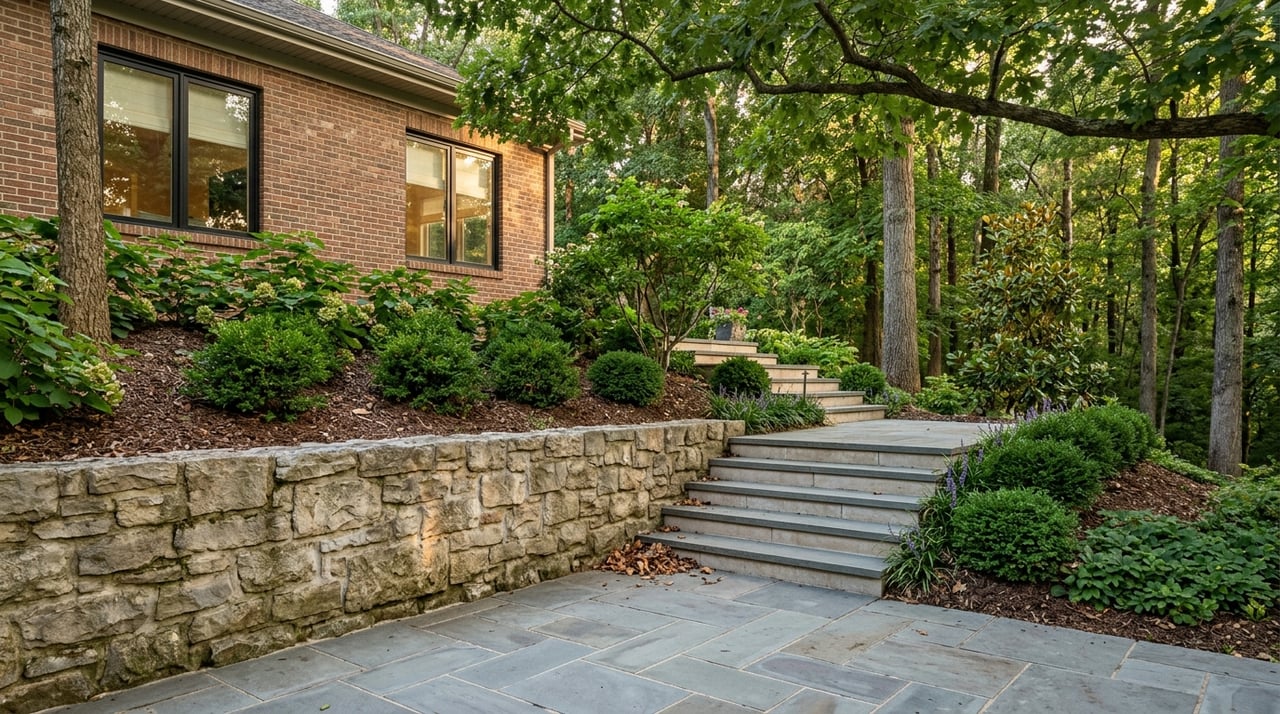
Forest Hills is an incorporated city in Davidson County with roots that go back to 1957. What defines it most, though, is not a typical subdivision pattern. It is better understood as a low-density, landscape-driven residential city shaped by rolling hills, steep terrain, and a strong focus on preserving scenic views and natural features.
That physical setting changes how the area feels when you drive through it. Instead of dense streetscapes or a commercial main corridor, you notice winding roads, tree cover, and a sense of visual privacy. The topography itself helps create that sheltered, secluded character.
In Forest Hills, the land is not just background scenery. The city and planning documents both point to rolling hills, steep slopes, and a pastoral landscape that residents value and actively work to protect. That gives the area a calm, established feel that is hard to replicate in flatter, more conventionally planned neighborhoods.
If your ideal home environment includes mature trees, quieter surroundings, and a stronger connection to natural features, this setting may appeal to you. Forest Hills tends to attract buyers who care as much about the lot, the views, and the wooded surroundings as they do about the house itself.
The housing story in Forest Hills is broad and architecturally interesting. Historic documentation describes homes that range from earlier log and antebellum houses to Colonial Revival and Tudor Revival estates from the 1930s and 1940s, along with postwar Colonial-influenced Ranch homes. That mix gives the city a more layered and custom feel than you might expect from a typical suburban search.
Many homes sit on larger parcels, which supports the area's pattern of deep setbacks, winding drives, and homes positioned within the landscape rather than close to the street. In practical terms, you are more likely to find a sense of separation between homes here than a dense neighborhood grid.
A good example from the historic record is the P.D. Houston Jr. House, a 1941 Tudor Revival home on a wooded 15.6-acre lot. While not every property is that large, it reflects an important part of Forest Hills’ identity. The city has long included homes on substantial tracts with mature landscaping and strong architectural character.
For buyers, that often means the appeal goes beyond square footage. Details like wooded lots, long approach drives, original design elements, and a custom-built feel can play a major role in value and lifestyle.
Forest Hills has remained primarily residential, with limited non-residential development. That matters if you are specifically looking for a home environment centered on private residential living rather than walkable retail or a mixed-use town center.
This is not the kind of place where the daily rhythm revolves around storefronts just down the block. Instead, the lifestyle is shaped more by home, land, and nearby park access.
One of Forest Hills’ strongest lifestyle advantages is how close it sits to meaningful outdoor recreation. The city has a small set of local amenities, including Bison Meadow, the John C. Lovell Bikeway, and playground access during non-school hours. The bikeway stretches about 1.5 miles from Percy Priest Elementary to Radnor Lake.
That local access is only part of the story. Forest Hills also borders major park resources on its east and west sides, which gives residents unusually easy access to trails, green space, and nature-based routines.
On the east side, Radnor Lake is one of the best-known natural areas in the Nashville area. Tennessee describes it as a roughly 1,367-acre Class II natural area about eight miles south of downtown Nashville, with more than six miles of hiking trails and day-use access. It is especially known for hiking, photography, and wildlife observation.
If you enjoy quiet trail time or a close-in nature escape, Radnor Lake adds real value to life in Forest Hills. It supports a daily routine that can feel more grounded and less rushed, even while staying connected to the broader city.
On the west side, Warner Parks add another major outdoor resource. Metro Nashville says the parks span more than 3,100 acres of forest and field, about nine miles from downtown. Park information highlights trails, picnic shelters, a dog park, golf courses, mountain biking, and equestrian use.
That range of options helps explain why Forest Hills often feels oriented around outdoor time rather than commercial activity. Depending on your routine, that might mean morning walks, trail outings, scenic drives, or time outdoors with pets and family.
Forest Hills is part of the broader south Nashville corridor connected to Green Hills and downtown. At the same time, its park edges and steep terrain help buffer it from busier commercial areas. That combination is a big part of the appeal.
You can think of Forest Hills as close to everyday Nashville access, but with a more tucked-away residential experience. For many buyers, that balance is exactly what makes the area memorable.
If you are relocating or narrowing your Davidson County search, Forest Hills can be a strong fit when your priorities include:
If your top priority is dense retail, a traditional neighborhood grid, or an active commercial district within the city itself, Forest Hills may feel quieter and more residential than what you want.
Forest Hills’ character is closely tied to local preservation and land-use oversight. The city’s Building & Zoning guidance notes that projects involving changes to structures or land forms may require approval. That can include additions, grading, pools, and other exterior work.
The city also points to a hillside protection overlay, which is especially relevant in an area defined by sloping terrain. If you are considering a purchase with renovation plans, it is wise to evaluate not just the house but also the site conditions and local permitting requirements.
In some neighborhoods, future changes to a property may be straightforward. In Forest Hills, the lot itself can be a central part of the equation. Slope, grading, tree cover, and how a project interacts with the land may all matter.
That does not mean improvements are off the table. It simply means buyers should approach renovations with a clear understanding of local review requirements and the practical realities of building on hilly, heavily landscaped lots.
Forest Hills offers a specific type of living experience that can be hard to find this close to Nashville. It is not defined by new density or a fast-paced retail scene. Instead, it stands out for its wooded setting, architectural variety, larger residential parcels, and strong connection to nearby parkland.
For the right buyer, that combination feels both peaceful and practical. You get a setting shaped by land and trees, with access to major natural amenities and the broader Nashville area still within reach.
If you are comparing neighborhoods in Davidson County, Forest Hills is worth viewing through a lifestyle lens as much as a housing lens. The city’s identity is deeply tied to how it looks, feels, and lives day to day.
If you want thoughtful guidance as you compare neighborhoods and weigh the lifestyle tradeoffs that matter most, Donna Stumpf offers a calm, strategic approach grounded in local insight.
Stay up to date on the latest real estate trends.
October 22, 2026
October 15, 2026
October 8, 2026
October 1, 2026
September 24, 2026
September 17, 2026

September 10, 2026

September 3, 2026

August 27, 2026
Buying or selling a home is more than a transaction—it’s a life moment. I’ll be your trusted partner, guiding you with expertise, honesty, and a smile every step of the way.
Donna Stumpf
8119 Isabella Ln Ste 105 Brentwood TN 37027