July 16, 2026
Curious why homes in Forest Hills feel so different from many other parts of Nashville? It often comes down to the land itself. If you are trying to understand what kinds of homes you will actually see here, and why they look the way they do, this guide will help you spot the main architectural styles and the site features that shape them. Let’s dive in.
Forest Hills is a small residential city in southwest Davidson County that is almost entirely residential, with no commercial development and no high-density housing. The city says the area developed as a Nashville suburb after World War II, and hundreds of dwellings have been built since 1970.
That history matters because it helps explain why Forest Hills does not read like a single planned subdivision with one repeating house type. Instead, you will find a mix of postwar homes, larger estate properties, and custom residences shaped by different decades of building.
The setting also plays a major role. Much of Forest Hills lies on hillsides and steep slopes, and the city regulates changes that affect land forms, trees, and site work. In practical terms, architecture here is shaped as much by topography, canopy, and privacy as by design trends.
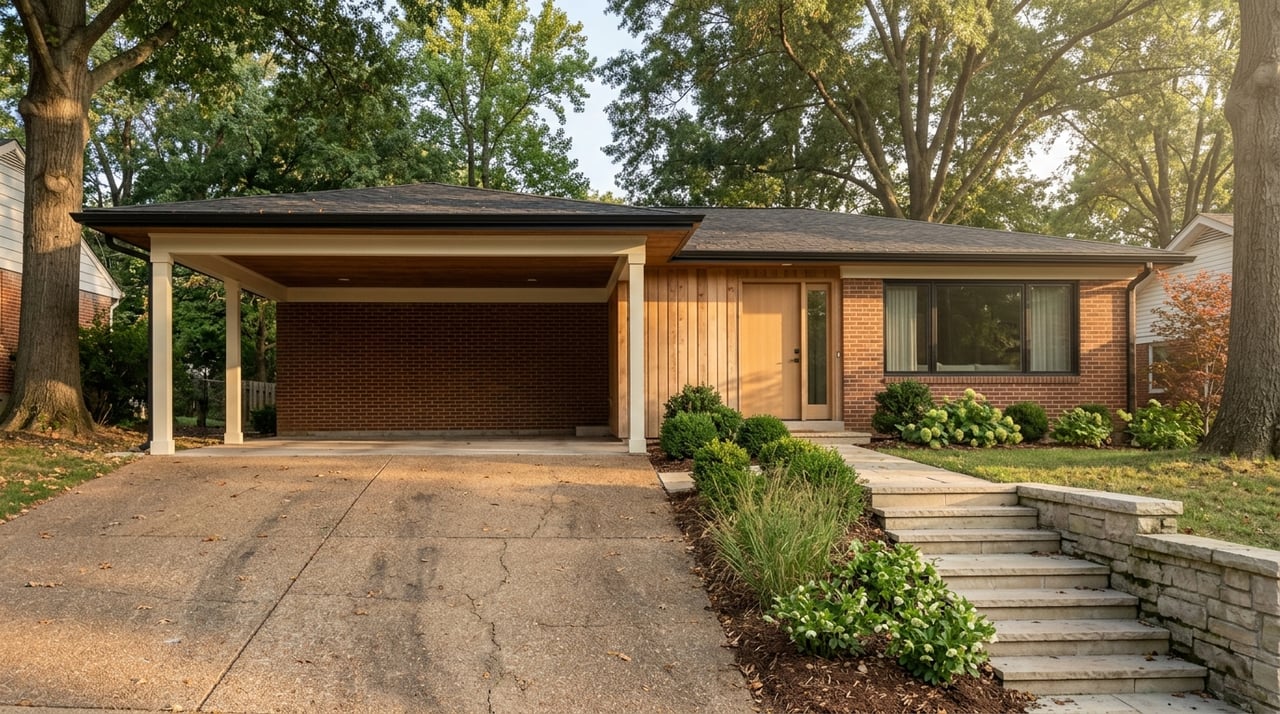
One of the clearest styles you will find in Forest Hills is the mid-century ranch. Recent listings in the area have specifically described homes as ranch-style, including classic postwar layouts on large, wooded lots.
These homes often stand out for their long, horizontal shape and easy connection to the outdoors. In Forest Hills, that look works especially well because many properties have generous setbacks, mature trees, and a sense of space that complements a lower-profile home.
For buyers, ranch homes can appeal for both livability and flexibility. Many are seen as strong renovation candidates, especially when the lot itself is a major part of the value.
You will also see mid-century modern influence in Forest Hills. Some listings explicitly use that label, which reflects the continued presence of postwar design in the area.
In a place with wooded acreage and sloping terrain, mid-century modern design feels especially natural. Clean lines, larger windows, and a stronger indoor-outdoor relationship fit well with private sites and scenic views.
This does not mean every home is a textbook mid-century modern. In Forest Hills, the more common pattern is a spectrum, from original mid-century homes to updated or reimagined versions that keep some of the style’s core character.
If you picture a more formal Forest Hills home, you are probably thinking of the traditional estate style. Recent listings described as Traditional or Southern classic include details such as millwork, winding staircases, arched doorways, and fireplaces.
These homes often present a more structured and formal appearance than ranch or mid-century properties. They tend to emphasize symmetry, defined rooms, and classic materials that give the home a more established estate feel.
In Forest Hills, traditional homes also benefit from the setting. Long approaches, landscaped entries, and wooded surroundings can make a formal home feel even more private and substantial.
Forest Hills also has a strong European-inspired design vocabulary, especially in larger luxury properties. Recent listings have included homes described as French Country, as well as residences with Italian villa influences such as stucco finishes and arched openings.
These homes usually feel more customized and expressive in their exterior design. Rooflines, entry details, and materials often work together to create a distinct old-world influence, even when the interiors are updated for modern living.
For many buyers, this style offers a blend of elegance and warmth. In a wooded setting like Forest Hills, that combination can feel especially compelling because the architecture and landscape often reinforce each other.
Forest Hills is not only about older homes. You will also find custom residences and newer builds that lean contemporary or transitional, often with a strong focus on site-specific design.
That custom quality is important. Rather than following a single neighborhood template, many larger homes in Forest Hills appear to be designed around the lot, the slope, and the desired relationship between the house and the landscape.
Recent examples point to clean modern aesthetics and indoor-outdoor living as recurring themes. In this market, newer homes often aim to feel tailored to the property instead of simply placed on it.
Another part of the Forest Hills housing story is the number of properties that are valued for both the existing home and the lot itself. Recent listings have specifically marketed some homes as opportunities to renovate or start fresh.
That tells you something important about the local market. In Forest Hills, the setting can carry significant value, especially when a property has wooded privacy, usable acreage, or a strong hillside position.
For buyers, this means it is worth looking beyond the current finishes or floor plan. The long-term appeal of the site may be just as important as the house you see today.
In Forest Hills, mature trees are more than a backdrop. The city regulates much tree removal, and each residential zoning district has a required tree canopy ratio to maintain.
Because of that, tree cover is part of how a property functions and how it is valued. Trees help hold soil in place and reduce runoff and erosion, especially on sloped lots.
You can see the effect in the way homes are positioned and presented. Tree-lined entries, screened views, shaded terraces, and a sense of seclusion are common features that support both the appearance and practicality of the home.
Steep slopes are one of the biggest reasons Forest Hills homes feel distinct from flatter suburban neighborhoods. The city says building and zoning review applies to changes that alter land forms, including retaining walls, decks, fences, pools, garages, and driveways.
That kind of oversight means site planning is a major part of the design process. Homes often need to step with the land rather than ignore it.
As a result, you are likely to notice features like terraced outdoor spaces, carefully placed driveways, and house forms that respond to elevation changes. In Forest Hills, the lot is not just where the home sits. It actively shapes what the home becomes.
Many Forest Hills listings emphasize acre-plus lots, wooded surroundings, and privacy. That repeated pattern helps explain why the area often feels more estate-like than many nearby parts of Nashville.
Forest Hills is almost exclusively residential, with low-density rules and no high-density housing. Combined with steep slopes and tree protection, those conditions favor detached homes on larger sites rather than tighter infill patterns.
This is one of the clearest differences between Forest Hills and more compact Nashville neighborhoods. Here, buyers are often choosing not just a house style, but also a more spacious and site-driven living environment.
If you are touring homes in Forest Hills, it helps to evaluate both architecture and land together. A beautiful house matters, but here the lot often carries equal weight.
Pay close attention to:
These details can help you understand why two homes with similar square footage may offer very different long-term appeal.
If you own a home in Forest Hills, your property’s style is only part of the story buyers will see. The site, privacy, and setting may be just as important to your home’s market position.
That is why presentation and pricing should reflect the full package. A mid-century ranch on a serene wooded lot, for example, may attract attention for its renovation potential, while a traditional or European-inspired estate may compete on craftsmanship, scale, and site presence.
In a market like this, clear positioning matters. Buyers are often comparing not just finishes, but also land value, design flexibility, and the overall experience of the property.
Forest Hills offers a layered architectural landscape rather than a single signature look. You are most likely to see mid-century originals, ranch reimaginings, traditional estate homes, French Country and other European-inspired residences, and custom contemporary or transitional homes, all shaped by wooded lots, steep slopes, and low-density residential character.
If you are buying or selling in this part of Davidson County, understanding the relationship between the house and the land can help you make a more confident decision. For thoughtful guidance on how to evaluate or position a home with that bigger picture in mind, connect with Donna Stumpf.
Stay up to date on the latest real estate trends.
October 22, 2026
October 15, 2026
October 8, 2026
October 1, 2026
September 24, 2026
September 17, 2026

September 10, 2026

September 3, 2026

August 27, 2026
Buying or selling a home is more than a transaction—it’s a life moment. I’ll be your trusted partner, guiding you with expertise, honesty, and a smile every step of the way.
Donna Stumpf
8119 Isabella Ln Ste 105 Brentwood TN 37027