
April 2, 2026
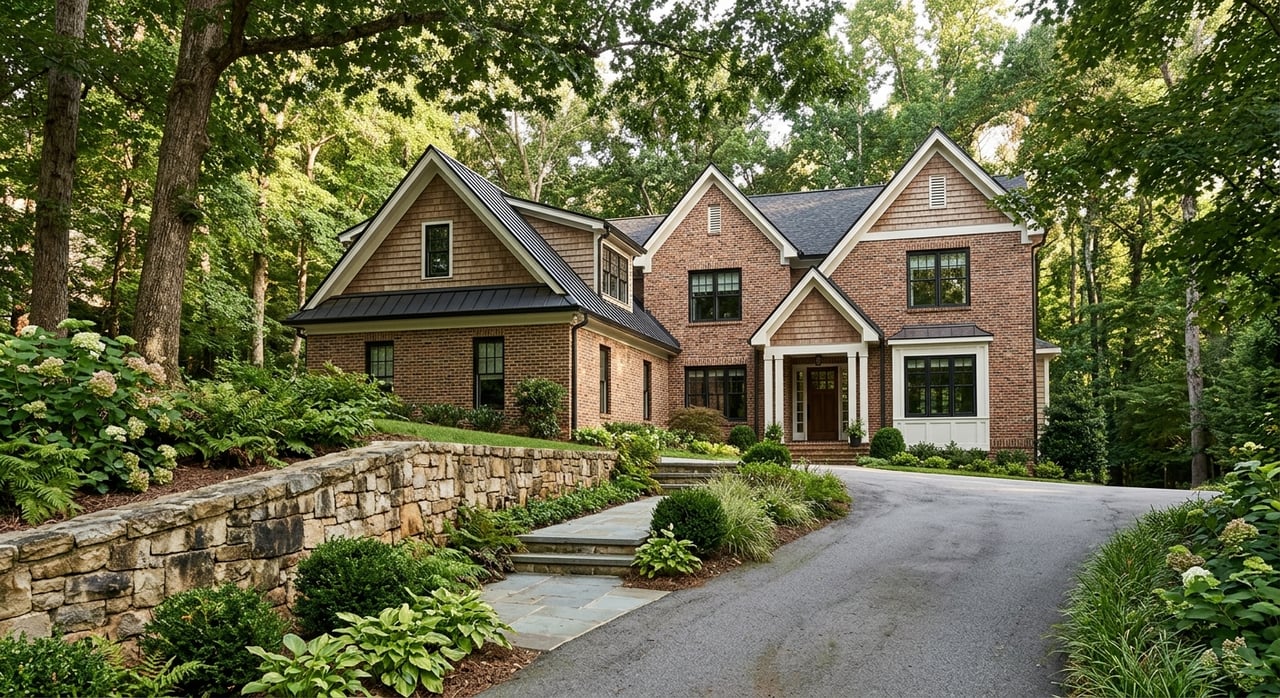
If you are thinking about buying in Forest Hills, the house itself is only part of the story. In this part of Davidson County, lot conditions, zoning, tree rules, and drainage can shape what you can actually do with a property after closing. If you want to buy with fewer surprises and more confidence, it helps to understand how Forest Hills works before you make an offer. Let’s dive in.
Forest Hills is a small residential city in southwest Davidson County with a distinct natural setting. The city highlights its scenic vistas, environmental features, and unique landscapes as priorities worth preserving, which helps explain why the area feels so different from more conventional suburban neighborhoods. You can learn more through the city’s preservation overview.
The numbers also help frame the market. According to Census Reporter’s Forest Hills profile, the city has 4,683 residents across 9.2 square miles, with a median owner-occupied home value of $1,413,100. That low-density pattern is part of the appeal, but it also means each parcel can come with very different site conditions and development limits.
Green space is another major part of the value proposition. The city notes that Forest Hills borders Radnor Lake State Natural Area and the Warner Parks, and it also points to local assets like Bison Meadow and the bikeway linking Percy Priest Elementary to Radnor Lake. If you are drawn to privacy, mature trees, and a more pastoral feel, those features may be a big reason Forest Hills is on your list.
In Forest Hills, land is not just background scenery. Rolling topography, mature tree cover, and stormwater flow patterns can all affect your ownership experience, especially if you hope to renovate, expand, or reshape the outdoor space.
The city describes the area as having rolling hills, and its stormwater information explains that rainfall moves from higher points to lower points. Forest Hills also notes that the headwaters of Richland Creek are located here and that urban stormwater runoff is a key pollution source, which is why site work gets close attention under the city’s stormwater framework.
That matters in practical ways. A sloped backyard, a low area that collects runoff, or signs of erosion may be more than cosmetic concerns. They can influence future project costs, maintenance needs, and what type of review may be required if you want to make changes.
In many areas, buyers assume they can remove trees, open up a view, or substantially rework the landscaping after purchase. In Forest Hills, that assumption can lead to frustration.
The city states that most tree removals require a permit, clearcutting is prohibited, and each residential zoning district must maintain a required tree-canopy ratio. If removal drops a property below the retention standard, the city may require a planting plan. You can review those details in the city’s tree protection guidance.
Some removals are exempt, including dead trees, storm-felled trees, invasive species, underbrush, and trees under 8 inches in caliper. Even so, the broader point is clear: tree cover is treated as a regulated site feature, not just a design choice. Before you buy, it is smart to ask not only whether you like the landscaping, but whether you could realistically change it later.
One of the most important things to know before buying in Forest Hills is that renovation and expansion potential can vary sharply from one parcel to the next. Two homes may look similar from the street, but their zoning and lot constraints can create very different possibilities.
The city directs buyers to its building and zoning resources, including the zoning map, bulk-regulation guides, and the Nashville Parcel Viewer, because permitted improvements depend on the exact parcel. The official zoning framework includes districts such as RA, EA, E1A, EB, EC, NC1, and NC2, among others, as shown on the official zoning map appendix.
The city’s current bulk guides show major differences in minimum lot size by district:
Those same bulk regulation guides also show different limits for building cover, impervious surface ratio, and floor area ratio. In simple terms, that means the lot may determine your future options as much as the existing house does.
If you are planning to add square footage, install a pool, build a larger garage, or expand hardscape, coverage limits deserve early attention. Forest Hills uses parcel-specific controls that can be more restrictive than buyers expect.
For example, the city’s guides show E1A at 5% building cover, 14% impervious surface ratio, and 7.5% FAR, while NC1 and NC2 allow 12% building cover, 20% impervious surface ratio, and 18% FAR. Those are meaningful differences when you are evaluating whether a property can support your long-term plans. The bulk regulation document is one of the most useful tools to review before you get too far into negotiations.
This is why a large-looking lot does not automatically equal flexibility. Between setbacks, slope, drainage, canopy requirements, and zoning metrics, some parcels offer much more usable capacity than others.
In Forest Hills, even modest site changes may require review. The city says construction and even certain land-form changes can require permits, and plans must be approved by the Building Official and City Manager. A variance may be requested through the Board of Zoning Appeals, but only in special hardship situations, according to the city’s building and zoning page.
That does not mean improvements are impossible. It means you should approach any property with a process mindset. If your purchase decision depends on changing the home or the site, you will want to confirm feasibility before closing rather than rely on assumptions.
For many buyers, the smartest approach is to treat Forest Hills as a parcel-driven market. The right due diligence can help you avoid buying a beautiful property that does not fit your actual goals.
Before making an offer, the city recommends reviewing the parcel’s zoning, building cover, impervious surface ratio, floor area ratio, height zone, floodplain status, and hillside-overlay status using the city’s tools and the Nashville Parcel Viewer available through the building and zoning resources. This step is especially important if you hope to expand the house, regrade the lot, remove mature trees, or add outdoor features.
Because stormwater is a serious issue in Forest Hills, it is also wise to look closely at drainage paths, retaining walls, down-slope runoff, and any evidence of flooding or erosion. The city’s 2025 stormwater update increased the water-quality buffer to 30 feet and tightened some construction-site rules, reinforcing that site work may trigger more review than buyers expect. You can see those updates on the city’s stormwater page.
A practical inspection stack for this type of purchase often goes beyond a standard home inspection. Depending on the lot, buyers may also want a survey, topographic review, arborist input, and, for sloped or constrained sites, a civil engineer or structural or foundation specialist. That kind of up-front analysis can help you make a better financial decision and plan more realistically.
If school assignment is one of your buying criteria, verify it directly rather than relying on listing remarks or general neighborhood assumptions. Metro Nashville Public Schools states that zoned schools are assigned by residential address and that some streets can split boundaries.
The most reliable step is to use the district’s MNPS Zone Finder for the specific property you are considering. That gives you address-based information and helps you avoid last-minute surprises.
When you tour homes in Forest Hills, keep your questions focused on both the structure and the site. In this market, that extra layer of diligence can save you significant time and expense.
Consider asking:
These are not minor details in Forest Hills. They can directly affect usability, project timelines, and long-term cost.
Buying in Forest Hills can be a great fit if you value privacy, natural beauty, and a more spacious residential setting close to some of Nashville’s most recognized green spaces. At the same time, this is a market where topography, tree protection, drainage, and zoning deserve just as much attention as finishes and floor plan.
If you are considering a purchase here, a calm, analytical approach goes a long way. The right property is not just the one that looks good today. It is the one that also supports how you want to live on the site over time. If you want a thoughtful second set of eyes as you evaluate homes and land constraints, Donna Stumpf can help you approach the process with clarity and confidence.
Stay up to date on the latest real estate trends.
October 22, 2026
October 15, 2026
October 8, 2026
October 1, 2026
September 24, 2026
September 17, 2026

September 10, 2026

September 3, 2026

August 27, 2026
Buying or selling a home is more than a transaction—it’s a life moment. I’ll be your trusted partner, guiding you with expertise, honesty, and a smile every step of the way.

Donna Stumpf
8119 Isabella Ln Ste 105 Brentwood TN 37027